

Securing a business loan can be a pivotal moment for your company’s growth, but understanding the intricacies of the process is crucial. One of the most important aspects to grasp is the concept of collateral. This article will delve into what collateral means in the context of your business loan application, exploring its various forms, the implications of providing it, and how it can impact your overall loan terms and interest rates. Understanding collateral is key to navigating the complexities of small business financing and obtaining the best possible terms for your needs.
Whether you’re seeking a secured loan or an unsecured loan, knowledge of collateral is essential. This guide will clarify the relationship between collateral and loan approval, highlighting how the type and value of your collateral can influence lender decisions. We’ll examine various types of collateral, including real estate, equipment, inventory, and accounts receivable, explaining the benefits and drawbacks of each. Ultimately, mastering the understanding of collateral will empower you to make informed decisions about your business financing, strengthening your application and achieving favorable loan terms.
What Is Collateral in Business Financing?
In the world of business financing, collateral plays a crucial role. It’s essentially an asset that you pledge to a lender as security for a loan. Should you default on your loan payments, the lender has the right to seize and sell this collateral to recoup their losses.
The nature of acceptable collateral can vary widely depending on the lender and the type of loan. Common forms of collateral include real estate (property), equipment (machinery, vehicles), inventory (goods for sale), accounts receivable (money owed to your business), and even intellectual property (patents, copyrights).
The value of the collateral significantly influences the lender’s decision to approve a loan and the terms they offer. A higher-value collateral typically translates to a lower interest rate and a larger loan amount. This is because the lender has a greater degree of security in case of default. The appraisal process is key to determining the value of the collateral, ensuring both borrower and lender have a clear understanding of its worth.
It’s important to note that pledging collateral doesn’t guarantee loan approval. Lenders also consider factors such as your credit history, business plan, and overall financial health. However, offering suitable collateral can significantly improve your chances of securing funding, especially if your credit history isn’t perfect.
Understanding the implications of using collateral is vital for any business seeking financing. It requires careful consideration of the potential risks involved, weighing the benefits of securing a loan against the possibility of losing a valuable asset. Proper legal counsel is often recommended to ensure a thorough understanding of the loan agreement and collateral implications.
Types of Collateral Commonly Accepted
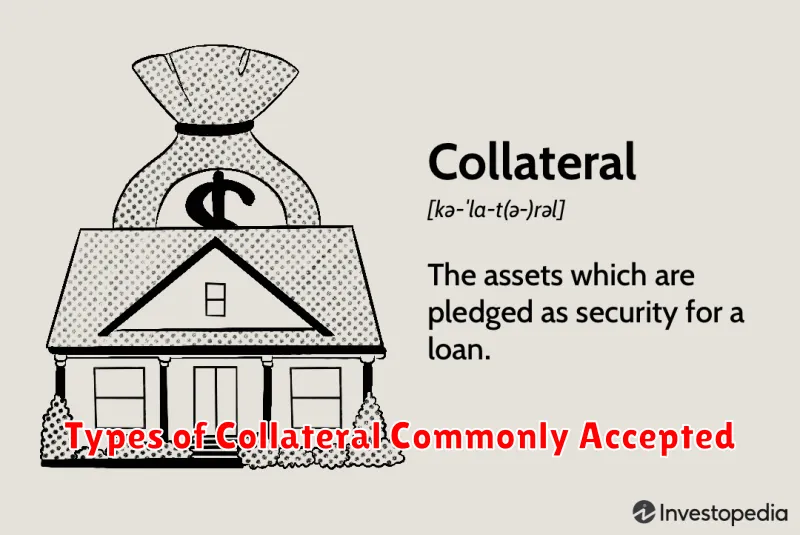
When applying for a business loan, understanding the types of collateral you can offer is crucial. Lenders assess the value of collateral to mitigate their risk. The acceptability of collateral depends on several factors, including its liquidity, market value, and the lender’s specific policies.
Real estate is a frequently accepted form of collateral. This includes both commercial and residential properties, offering significant value and relative stability. The appraisal process is key to determining the loan-to-value ratio (LTV).
Equipment, such as machinery, vehicles, and other business assets, can also serve as collateral. The age, condition, and market value of the equipment are important factors considered by lenders. They often require appraisals or verification of ownership.
Inventory can be used as collateral, especially for businesses with readily marketable goods. However, the perishability and fluctuation in value of inventory present challenges for lenders. They often require detailed inventory management systems and regular assessments of value.
Accounts receivable, which represent money owed to the business by its customers, can also be used. However, lenders assess the creditworthiness of the debtors and the likelihood of collection. Factoring companies specialize in financing based on accounts receivable.
Securities, including stocks and bonds, can function as collateral. The value of these assets fluctuates, requiring close monitoring by the lender. The market volatility is a key factor considered in evaluating their suitability as collateral.
Finally, cash and cash equivalents represent the most liquid form of collateral, offering minimal risk to the lender. However, businesses rarely pledge all their readily available cash as collateral.
How Collateral Reduces Lender Risk
Collateral significantly reduces the risk for lenders when considering business loans. It acts as a safety net, providing a tangible asset that the lender can seize and sell if the borrower defaults on their loan payments. This minimizes the lender’s potential financial loss.
The presence of collateral allows lenders to offer more favorable loan terms, including lower interest rates and potentially larger loan amounts. This is because the risk of non-payment is mitigated by the value of the pledged asset. Knowing they have a fallback option in the event of default gives lenders greater confidence in extending credit.
Different types of collateral offer varying levels of security. For instance, real estate is often considered a more stable and easily valued form of collateral compared to inventory, which can fluctuate significantly in value. The lender will carefully assess the type and value of the offered collateral to determine its suitability and impact on the overall risk assessment.
Furthermore, the process of securing collateral involves a thorough appraisal of the asset’s value. This due diligence reduces the risk of overvaluation, preventing the lender from extending credit based on an inflated asset value. This precise valuation contributes to a more accurate and responsible lending decision.
In essence, collateral acts as a buffer against potential losses for the lender. It provides a tangible means of recovering funds if a borrower fails to meet their obligations, making it a crucial element in the business loan process.
What Happens If You Default on a Secured Loan?
Defaulting on a secured loan has significantly more severe consequences than defaulting on an unsecured loan. The key difference lies in the presence of collateral.
When you take out a secured loan, you pledge an asset—like property, equipment, or inventory—as collateral. This asset serves as security for the lender. If you fail to make your loan payments as agreed upon in the loan agreement, the lender has the right to seize and sell your collateral to recoup their losses.
The process of the lender taking possession of your collateral is called repossession. This can be a complex legal process, varying by jurisdiction and the type of asset involved. For example, repossessing a vehicle is often simpler than repossessing real estate.
After repossession, the lender will typically sell the collateral at auction or through other means. The proceeds from the sale are then used to pay off the outstanding loan balance. If the sale proceeds are insufficient to cover the entire debt, you may still be liable for the deficiency balance. This means you could face further legal action to recover the remaining amount.
Beyond the loss of collateral and potential deficiency balance, defaulting on a secured loan will severely damage your credit score. This negative impact can make it extremely difficult to obtain financing in the future, impacting your business’s ability to grow and thrive. Your business reputation may also suffer, potentially impacting future relationships with suppliers and customers.
It is crucial to understand the implications of using collateral when securing a loan. Thoroughly review the loan agreement and ensure you have a realistic plan to repay the loan before committing to the agreement. If you anticipate difficulty making payments, contact your lender immediately to explore potential options, such as loan modification or forbearance, before defaulting.
Tips to Protect Your Business Assets
Protecting your business assets is crucial, especially when considering a loan secured by collateral. Understanding and safeguarding your assets are key to maintaining financial stability and mitigating risk.
Properly insure your assets. This includes comprehensive coverage for buildings, equipment, inventory, and intellectual property. Ensure your insurance policies adequately reflect the current value of your assets and any potential liabilities.
Maintain meticulous records. Accurate and up-to-date records of all your business assets are essential for both tax purposes and for demonstrating your financial standing to lenders. This documentation should include purchase dates, costs, and current valuations.
Implement robust security measures. Depending on the nature of your assets, this could range from installing security systems and alarm systems to implementing strong cybersecurity protocols to protect digital assets. The goal is to minimize the risk of theft, damage, or loss.
Regularly review and update your asset protection plan. Your business and its asset holdings will likely change over time. Regularly reviewing your insurance policies, security measures, and record-keeping procedures will help ensure they remain effective and relevant.
Consult with legal and financial professionals. Seeking advice from legal counsel and financial advisors can provide valuable insights into asset protection strategies that are tailored to your specific circumstances and business needs. They can help you navigate complex legal issues and optimize your financial planning.
By proactively implementing these strategies, you can significantly reduce the risks associated with business loan collateral and safeguard the value of your hard-earned assets.
When an Unsecured Loan Might Be Safer
While secured loans, backed by collateral, are often seen as the safer option for lenders, there are situations where an unsecured loan might present less risk for the borrower. This seemingly paradoxical situation arises when considering the potential consequences of defaulting on a loan.
One key scenario is when the collateral’s value is significantly less than the loan amount. If a business uses valuable equipment as collateral for a loan, but the value of that equipment depreciates rapidly, the business might face losing a valuable asset without significantly reducing the loan balance. An unsecured loan, while potentially carrying a higher interest rate, avoids this risk of losing a crucial piece of business equipment.
Another instance where an unsecured loan might be preferable involves businesses with limited assets. Startups or very small businesses may not possess significant collateral to offer. Attempting to secure a loan with inadequate collateral could negatively impact the lender’s assessment, possibly preventing them from securing funding altogether. An unsecured loan provides an alternative route to access funding in such cases.
Finally, the personal liability associated with both secured and unsecured loans should be considered. While a secured loan protects the lender by seizing collateral upon default, it could still jeopardize the borrower’s personal assets. If the business’s collateral is insufficient to cover the loan, the lender may pursue the business owner’s personal assets. In certain instances, an unsecured loan, where the liability is limited to the business, might offer better protection for the business owner’s personal finances.
